

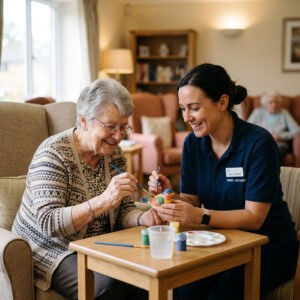
I am an Activity Professional.
by Debbie Hommel, ACC/MC/EDU, CTRS
“I wish I had your job – all you do is have fun all day.”
“We are looking for a “cheerleader” type person to be the activity director.”
and the worst yet – “It doesn’t take a rocket scientist to do activities.”
Statements like these reveals one of the biggest challenges facing the Activity Professional. Many people only see the visible aspect of our work, not the clinical and regulatory knowledge or leadership behind it.
Residents may see bingo, music, crafts, or celebrations. Families may see smiles and laughter. Staff may see calendars and decorations. What they often do not see is the assessment process, behavioral observation, individualized care planning, documentation requirements, interdisciplinary collaboration, infection prevention, dementia-specific interventions, emotional support, and therapeutic intent that guide every successful program.
An Activity Professional is not simply “keeping people busy” or “having fun all day.” The profession requires the ability to understand the individual person, cognitive and physical changes, psychosocial needs, cultural background, communication, motivation, and quality-of-life outcomes. Effective programming is intentionally designed to support dignity, autonomy, engagement, identity, social connection, and emotional well-being.
When someone says, “We want a cheerleader personality,” they may not realize that enthusiasm alone is not enough. While energy and positivity are valuable traits, they do not replace the competencies required to assess individual needs, adapt programs for varying levels of ability, manage complex group dynamics, document participation outcomes, address behaviors related to dementia, comply with regulations, and lead a department responsibly. It certainly takes more than a happy person to accomplish all of this.
And perhaps the most frustrating statement of all — “It doesn’t take a rocket scientist to do activities” — minimizes an entire profession built on specialized education, creativity, adaptability, and compassionate leadership. Activity Professionals are often expected to simultaneously be event planners, counselors, behavioral specialists, educators, advocates, motivators, and culture builders within a community.
The reality is this: meaningful engagement does not happen by accident. Therapeutic programming requires planning, assessment, adaptation, and intent. The best Activity Professionals understand that every interaction has the potential to make a difference. Each encounter can improve mood, reduce isolation, support function, decrease distress, encourage purpose, and enhance quality of life.
Those within the profession understand that activities are not “extras.” Meaningful engagement in these activities are essential to person-centered care. Communicating the value of what we do, whenever we can, is an additional responsibility within our professional scope. Being a strong activity professional means being able to communicate the therapeutic value behind the “fun”. The “fun” is important — joy, laughter and pleasure matter deeply in quality of life. But behind that enjoyment is professional knowledge, individualized planning, adaptation, and person-centered care. Competent Activity Professionals know how to create meaningful experiences as well as how to communicate why those experiences matter.
Looking for information about the activity profession and being an activity professional? Check out The Role of the Activity Professional – a 4.5 independent study program which introduces foundational information for the activity professional. Standards of practice, certification, professional affiliation, models of care and much more are introduced in this program. The program introduces key information as well as strengthening the knowledge of an experienced activity professional.
The Role of the Activity Professional
NCCAP Approved 4.5 CE Hours